ਵਾਹਿਗੁਰੂ ਜੀ ਕਾ ਖਾਲਸਾ, ਵਾਹਿਗੁਰੂ ਜੀ ਕੀ ਫਤਹਿ
Welcome to the Singh Sabha Gurdwara of Yakima — a home for the Sikh community of the Yakima Valley. All are welcome to worship, learn, and share in Langar.
Our Story
The Sikh Sangat (congregation) of Yakima has grown steadily over the past several decades. As families moved to the valley, there was a growing need for a local place of worship. For many years, families traveled to the Tri-Cities Gurdwara on Sundays and for special occasions.
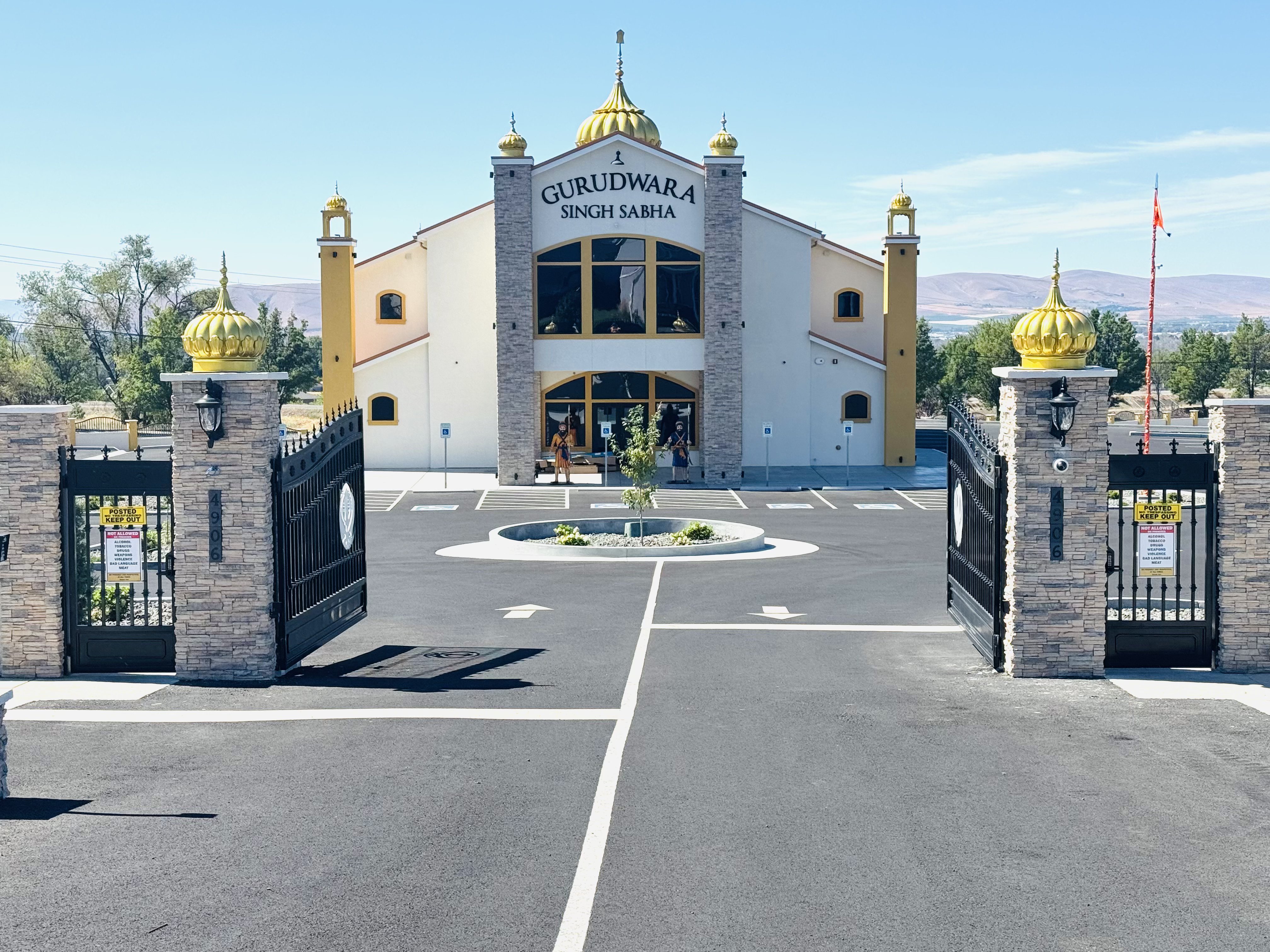
In 2014, our first Gurdwara opened in Selah, marking a milestone for our community. By 2019, growth led us to relocate to West Valley. Now, with an ever-growing Sangat, we are building a permanent home in Terrace Heights.
"ਸਭੇ ਸਾਝੀਵਾਲ ਸਦਾਇਨਿ ਤੂੰ ਕਿਸੈ ਨ ਦਿਸਹਿ ਬਾਹਰਾ"
All are partners; none appear to be outside of You — Guru Granth Sahib JiOur Gurdwara is open to all, regardless of faith, background, or heritage. We invite you to join us in worship, community, and Langar.
Our Faith
Sikhism (Sikhi) is the world's fifth-largest religion, founded in the Punjab region of South Asia in the 15th century by Guru Nanak Dev Ji. It is a monotheistic faith centered on equality, service, and devotion to the One Creator.
Sikhism teaches that there is only One God (Waheguru), who is formless, timeless, and pervades all of creation. The Mool Mantar, the foundational prayer, begins with "Ik Onkar" — There is One God.
Naam Japna — Meditating on God's name. Kirat Karni — Earning an honest living. Vand Chakna — Sharing with others. These three form the daily practice of every Sikh.
Sikhism rejects caste, gender discrimination, and religious exclusion. All people are considered equal in God's eyes. The Langar (free community kitchen) was instituted to break down caste barriers by dining together.
The eternal, living Guru of the Sikhs is the Sri Guru Granth Sahib Ji — the holy scripture. It contains hymns and teachings of the Sikh Gurus and saints of other faiths, emphasizing love, truth, and devotion.
Baptized Sikhs (Amritdhari) wear five articles of faith: Kesh (uncut hair), Kara (steel bracelet), Kanga (wooden comb), Kachera (cotton undergarment), and Kirpan (small sword representing justice).
Sewa is the spirit of selfless service — serving others without expectation of reward. From cooking Langar to cleaning the Gurdwara, Sewa is a core spiritual practice that connects the community to Waheguru.
Our Heritage
Sikhism was shaped by ten human Gurus over roughly 240 years (1469–1708). Each Guru carried the same divine light and built upon the teachings of their predecessors. The tenth Guru, Guru Gobind Singh Ji, declared the Guru Granth Sahib Ji as the eternal, living Guru for all time.
At The Gurdwara
The weekly Diwan (congregational worship) includes Kirtan (devotional singing), Ardas (prayer), Hukamnama (the day's divine message from the Guru Granth Sahib Ji), and Langar. All are warmly welcome.
The Anand Karaj is the Sikh ceremony of marriage, conducted in the presence of the Guru Granth Sahib Ji. The couple circles the holy scripture four times, each round representing a divine blessing. Contact us to arrange a ceremony.
A child's name is chosen by taking the Hukamnama — the first letter of the revealed shabad becomes the first letter of the child's name. A beautiful tradition connecting every Sikh child to the Guru's guidance.
An Akhand Paath is an unbroken, continuous recitation of the entire Guru Granth Sahib Ji (approximately 48 hours). A Sehaj Paath is a relaxed reading over a flexible period. Both are arranged for special occasions and remembrances.
We host youth programs and Sikhi camps to help younger generations learn about their faith, Punjabi language, Gurbani, and Sikh history. Our community is committed to nurturing the next generation.
Gurpurabs are celebrations of the Sikh Gurus' birth and martyrdom anniversaries. We hold special extended Diwans, Nagar Kirtans (processions), and Langar on these sacred occasions throughout the year.
Community Kitchen
One of Sikhism's most beautiful and revolutionary traditions is the Langar — a free, community-prepared vegetarian meal served to all who come, regardless of faith, caste, wealth, or background.
Instituted by Guru Nanak Dev Ji and formalized by Guru Amar Das Ji, Langar embodies the principle of equality: everyone sits together on the same level and shares the same food. It is both an act of Sewa (selfless service) and a statement that all human beings are equal.
At our Gurdwara, Langar is served after every Sunday Diwan. Volunteers prepare and serve the meal as a spiritual practice. You are always welcome to join us at the table — or to help in the kitchen.
"Before becoming a Sikh,
one must share
a meal with all."
Guru Amar Das Ji's Teaching
Support Langar SevaSacred Scriptures
Nitnem is the daily routine of Sikh prayers. These sacred compositions from the Guru Granth Sahib Ji and Dasam Granth are recited every day by practicing Sikhs.
Composed by Guru Nanak Dev Ji, Japujee Sahib is the opening prayer of the Guru Granth Sahib Ji. It describes the nature of God, the path to liberation, and the stages of spiritual awakening (the Panj Khands). It begins with the Mool Mantar — the root statement of Sikh belief.
Read Japujee Sahib →Composed by Guru Arjan Dev Ji, Sukhmani Sahib is one of the most beloved compositions in Sikh scripture. Its name means "jewel of peace." It consists of 24 sections (Ashtpadis) and teaches the path of remembering God's name as the source of inner peace.
Read Sukhmani Sahib →Rehras Sahib is the evening prayer, composed by multiple Gurus. It is a prayer of gratitude and surrender to God at the end of the day, asking for strength and protection through the night. It reinforces the remembrance of Waheguru after a day of honest work.
Kirtan Sohila is the final prayer of the day, recited before sleeping. It is also the prayer recited at the conclusion of life — read at Sikh cremation ceremonies. Composed by three Gurus, it is a beautiful reminder of the soul's journey toward union with God.
Ardas is the formal Sikh prayer of supplication, recited standing with folded hands at the beginning and end of every worship service, ceremony, and significant undertaking. It commemorates the Gurus' sacrifices and asks for God's blessing upon the Sangat and all of humanity.
Each day, a passage is randomly opened from the Guru Granth Sahib Ji — this is the Hukamnama, the divine command or message of the day. It is read aloud to the Sangat during Diwan. Sikhs receive the Hukamnama as personal guidance from the Guru for that day.
Construction Update
Due to the steadily growing Sikh community of the Yakima Valley, the Sangat has undertaken the construction of a permanent Gurdwara in Terrace Heights, Yakima, WA.
Construction began at the end of 2022. Completed 2025! This will be a true home for our Sangat — a Gurdwara where generations can come to worship, learn, celebrate, and serve.
Your Seva (donation) directly supports the construction of this Gurdwara. Every contribution, large or small, is an act of devotion and service to the community.
Whether you are Sikh, curious about Sikhism, or simply looking for community — our doors are always open. Come for Sunday Diwan, stay for Langar. No prior knowledge needed.